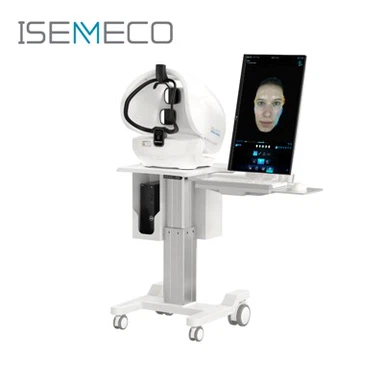
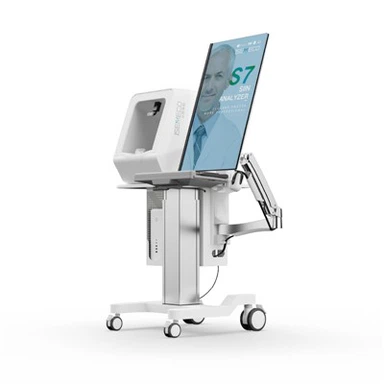
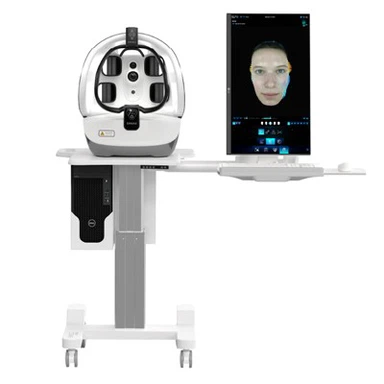
Skin Scanner Analyzer: A Professional Tool For Precisely Understanding Skin Condition
Oct 11, 2025
In the field of skin health management, scientific assessment is the prerequisite for developing effective skincare plans. As a professional device integrating optics, digital imaging, and intelligent algorithms, the skin scanner analyzer is gradually becoming a core tool for medical aesthetic institutions, dermatologists, and health management organizations, driving skin analysis from experience-based judgment to data-driven and visualized approaches.
The core advantage of this device lies in its multi-dimensional, high-precision skin data collection and analysis capabilities. It uses specific wavelengths of light (such as visible light, polarized light, and ultraviolet light) to penetrate the skin's surface, combining a high-resolution imaging system to capture microscopic features from the epidermis to the superficial dermis. It can quantify key indicators such as pigment distribution, texture roughness, pore density, moisture content, sebum secretion, and potential sensitive areas. Compared to traditional visual observation or single-parameter testing, it can more systematically reveal the underlying causes of skin problems-for example, pigmentation may be related to accumulated UV damage, enlarged pores may be related to sebum secretion imbalance, and localized redness may indicate a weakened skin barrier function.
In practical applications, the value of skin scanning analyzers lies in two main dimensions: "precision" and "dynamic tracking." On the one hand, by generating intuitive comparative maps (such as differences between the left and right sides of the face, and the grading of problems in different areas), it helps practitioners quickly pinpoint users' skin pain points and avoid subjective misjudgments. On the other hand, it supports the establishment of long-term monitoring records, allowing for objective evaluation of skincare plans or treatment effects through longitudinal comparison of multiple test data, providing users with more scientific suggestions for improvement. Currently, this technology is widely used in acne management, anti-aging planning, and sensitive skin repair, enhancing both service professionalism and user trust in the solutions.
As consumers pay increasing attention to skin health, skin scanning analyzers are reshaping industry service models with their "data-driven" characteristics. It not only bridges professional assessment and personalized care but also promotes skin health management towards a more rigorous and efficient direction, providing technical support for industry standardization and refined operations.