Performance Analysis Of Skin Scanning Analyzers
Oct 14, 2025
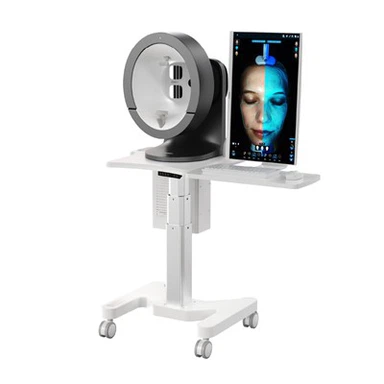
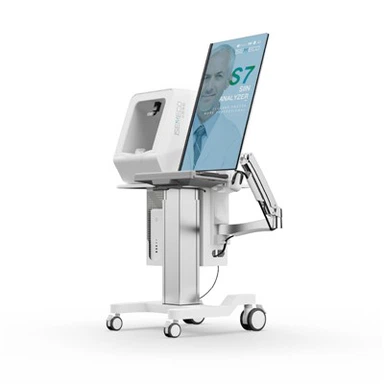
In the ever-increasing pursuit of refinement and scientific rigor in skin health assessment, the performance level of skin scanning analyzers directly determines the reliability and application value of the test results. Its comprehensive performance is reflected in imaging quality, detection dimensions, response speed, stability, and data analysis capabilities. These elements collectively form the technological foundation for the equipment's efficient and accurate services.
Imaging quality is the primary performance indicator. High-quality equipment is equipped with a multi-band light source system and a high-resolution optical sensor, enabling it to acquire clear images under different modes such as visible light, polarized light, and ultraviolet light, capturing subtle structures such as epidermal texture, pigment particles, and capillary networks. High-sensitivity imaging combined with low-noise algorithms ensures that detail reproduction is maintained even under complex lighting or skin tone conditions, providing reliable raw data for subsequent analysis.
Detection dimensions and coverage breadth highlight the comprehensive performance of the equipment. Advanced instruments can simultaneously quantify multiple skin parameters, including moisture content, sebum secretion, pore density, texture roughness, pigmentation, and potential sensitive reaction areas, forming a multi-layered, multi-angle skin condition map. Multi-dimensional detection not only enhances the comprehensiveness of problem identification but also, through algorithmic correlation of different indicators, assists in analyzing causes and interrelationships, supporting more scientific intervention decisions.
Response speed and operational smoothness impact the actual user experience. High-performance equipment possesses rapid startup and instant imaging capabilities, allowing the detection process to be completed quickly, reducing user waiting time and improving service efficiency. Simultaneously, the precise positioning and excellent shock resistance of the mechanical adjustment system ensure consistent imaging under different environmental and individual conditions, reducing errors introduced by external interference.
Stability and data analysis capabilities are crucial for long-term application. The equipment must maintain stable output from the optical and computing systems during extended operation, avoiding data deviations caused by component drift. The built-in high-performance processor and dedicated algorithms can quickly complete image noise reduction, feature extraction, and indicator calculation, and support historical data comparison and trend analysis, providing reliable support for dynamic monitoring and treatment efficacy evaluation.
In summary, the skin scanning analyzer, with its superior imaging quality, rich detection dimensions, rapid response, excellent stability, and in-depth data analysis capabilities, forms a complete high-performance system, laying a solid foundation for accurate and efficient detection and management in the field of skin health.