Analysis of the Physical Properties of Scalp Analyzers: The Technological Foundation for Precise Detection
Nov 19, 2025
In hair health management and clinical applications, the functionality and performance of scalp analyzers fundamentally depend on the physical properties embodied in their internal structure and external form. These physical properties not only determine the device's imaging capabilities, stability, and adaptability but also directly affect the accuracy and repeatability of the detection process, making them crucial dimensions for evaluating the instrument's suitability and reliability.
First, optical imaging performance is one of the core physical properties. The device relies on a high-resolution microscope lens and a controllable spectral light source to observe the scalp surface and hair follicle structure. The numerical aperture and resolution of the lens determine the minimum recognizable structural size, typically at the micrometer level, sufficient to clearly present changes in hair shaft diameter, follicle opening morphology, and keratinocyte granules. The light source system should possess wavelength tunability and intensity stability. Different wavelengths (such as visible light, polarized light, near-infrared, or ultraviolet light) have varying penetration and reflection characteristics in skin tissue, providing differentiated information from the surface to the superficial layers. Aberration control and anti-scattering design of the optical system reduce imaging distortion and noise, ensuring image clarity and contrast.
Secondly, the stability and adjustability of the mechanical structure are key mechanical and geometrical properties. The platform and clamping device must possess appropriate rigidity and anti-slip properties to suppress displacement and vibration during testing, ensuring a constant subject head position and imaging distance. A multi-dimensional adjustable support allows for pitch, rotation, and fine-tuning of height to accommodate different head shapes and sitting postures, maintaining alignment between the optical axis and the scalp normal, thereby reducing measurement errors introduced by posture deviations. Material selection must balance lightweight and durability, commonly using aluminum alloys or engineering plastics to achieve a balance between portability and structural strength.
Thermal and electrical stability are also crucial. Imaging and signal processing circuits should maintain constant performance within a certain ambient temperature range to prevent fluctuations in light source intensity or sensor response due to temperature drift, which could affect data consistency. The power management system must have filtering and voltage regulation functions to reduce the impact of external power grid disturbances on image quality, especially ensuring stable signal output during continuous testing tasks.
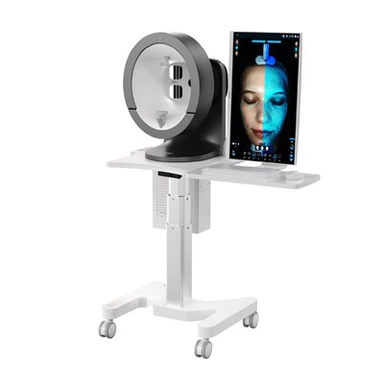
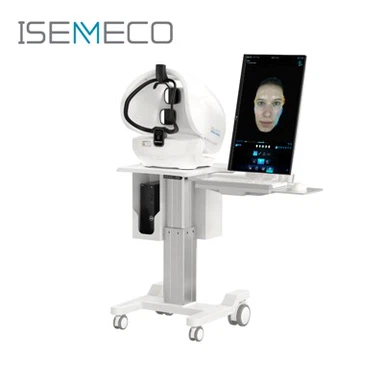
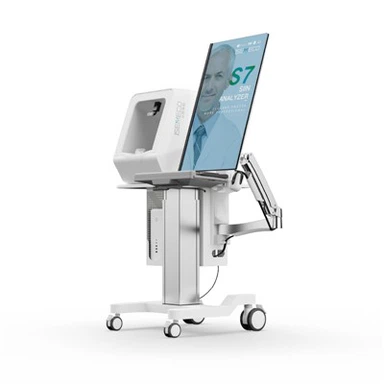
Furthermore, the equipment's dimensions and weight reflect its spatial physical properties, determining its deployment flexibility. A vertical structure facilitates fixed placement and multi-person rotation, while a desktop or portable design is convenient for use in space-constrained environments, such as small clinics or mobile clinics. The outer casing surface treatment should possess anti-static, scratch-resistant, and easy-to-clean properties to meet the stringent hygiene requirements of medical and beauty settings.
In summary, the physical properties of a scalp analyzer encompass optical imaging performance, mechanical stability and adjustability, thermal and electrical stability, as well as spatial and material characteristics. These properties collectively constitute the physical basis for the device to achieve high-precision, highly consistent testing, and also ensure its reliable application in various scenarios.