MEICET D9 3D Skin Analysis in Rosacea Clinical Study
Jul 02, 2026
Clinical Research Overview: AI Skin Imaging Supporting Personalized Dermatological Treatment
This clinical study highlights the role of advanced skin imaging technology in supporting personalized aesthetic and dermatological treatments.
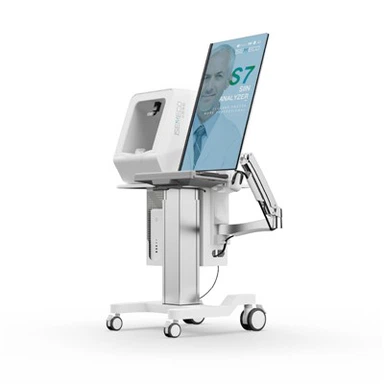
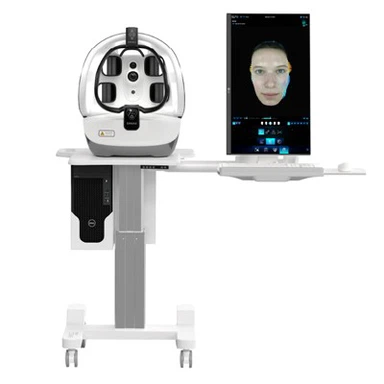
In this research, clinicians utilized the MEICET D9 3D Skin Analysis System to capture facial images and perform comprehensive skin analysis throughout the treatment process.
With AI-powered imaging technology, MEICET D9 helps visualize facial skin conditions, including redness distribution, vascular patterns, and skin changes that may not be easily identified through traditional observation.
The objective imaging data provided clinicians with valuable references for treatment planning, parameter adjustment, and clinical progress evaluation.
By integrating AI skin analysis into real-world clinical practice, MEICET continues to empower dermatology and aesthetic professionals with more precise, data-driven solutions for personalized patient care.
Clinical Overview
Rosacea is a chronic inflammatory skin disorder characterized by persistent facial erythema, visible telangiectasia, and inflammatory papules or pustules.
Beyond its dermatological manifestations, rosacea can significantly impact patients' psychological well-being and quality of life.
Conventional treatments, including topical agents and oral antibiotics, primarily target inflammation but often show limited efficacy in persistent vascular symptoms such as facial redness.
In recent years, laser-based vascular therapies have become an important adjunct in the management of rosacea.
This study evaluates the clinical outcomes of a 532nm long-pulse KTP laser system in Asian patients with facial rosacea, with clinical evaluation supported by advanced 3D skin imaging technology.

Study Design
This retrospective case series was conducted based on real-world clinical data collected between 2024 and 2025.
Study Information:
- Total cases: 3 patients
- Gender: Female
- Ethnicity: Asian (Chinese)
- Skin type: Fitzpatrick Type III
- Diagnosis: Erythematotelangiectatic or mixed rosacea
All patients were treated using a 532nm long-pulse KTP laser system with Variable Sequential Pulse (VSP) technology and integrated cooling system.
Clinical progress was documented and evaluated using a 3D skin analysis system with advanced imaging technology.
Treatment Protocol
All patients received combination therapy, including:
- 532nm long-pulse KTP laser treatment
- Oral macrolide antibiotics
- Topical anti-inflammatory and skin barrier support therapy
The laser treatment primarily targeted superficial vascular lesions responsible for persistent facial erythema.
Treatment parameters were individualized based on:
- Severity of erythema
- Vascular distribution and depth
- Skin response during treatment
- Real-time imaging guidance provided by the 3D skin analysis system
Key Clinical Outcomes
Across all cases, consistent clinical improvements were observed:
✔ Significant reduction in facial erythema
✔ Improvement in inflammatory papules
✔ Decrease in visible superficial vascular components
✔ Good treatment tolerability with minimal downtime
Post-treatment reactions were mild and transient, including:
- Mild erythema
- Temporary swelling
- Recovery within 1–2 days
No severe adverse events such as scarring, persistent hyperpigmentation, or prolonged irritation were reported.

Imaging and Evaluation System
Treatment evaluation was supported by a 3D skin analysis system combined with cross-polarized light (CPL) imaging technology.
The imaging system enabled clinicians to:
- Visualize subsurface vascular changes
- Monitor erythema reduction over time
- Improve treatment parameter adjustment
- Provide visual documentation of clinical progress
By providing objective visual references, AI skin imaging technology supports more accurate treatment assessment and personalized clinical decision-making.
Although imaging analysis is not a substitute for standardized clinical scoring systems, it provides valuable visual support for treatment evaluation.
Mechanism of Action
The pathophysiology of rosacea involves both inflammatory and vascular dysregulation.
The 532nm wavelength exhibits strong absorption by hemoglobin, making it highly effective for targeting superficial vascular structures.
When combined with:
- Selective photothermolysis
- Variable pulse energy modulation (VSP technology)
- Epidermal cooling protection
the system may help reduce vascular abnormalities while minimizing epidermal thermal damage.
Safety Evaluation
In this study:
- No serious adverse events were observed
- No clinically significant pigmentation disorders occurred
- Recovery time was short (1–2 days)
However, caution is required when treating Asian skin types (Fitzpatrick III–V), which may be more susceptible to pigmentary changes following laser procedures.
Proper parameter selection and cooling protection are essential for safety optimization.

Study Limitations
This study has several limitations:
- Small sample size (n = 3)
- Retrospective study design
- No control group
- Short follow-up period (12 weeks)
- Concomitant systemic and topical therapies
Therefore, the findings should be considered preliminary and hypothesis-generating rather than definitive clinical evidence.
Conclusion
This retrospective case series suggests that the 532nm long-pulse KTP laser system, supported by advanced 3D skin imaging technology, may offer clinical benefits in improving facial erythema and vascular components in Asian patients with rosacea.
The integration of AI-powered skin analysis provides clinicians with additional visual insights for treatment evaluation and personalized patient management.
However, larger prospective, controlled studies are required to further validate long-term efficacy, safety, and recurrence control.
References (Original Research Source)
This article is based on the following peer-reviewed publication:
Clinical Outcomes of 532nm Long Pulse Laser Treatment for Facial Rosacea
Journal of Cosmetic Dermatology (Wiley)
Original Article Link:
https://www.kdocs.cn/l/cqgpxTpOujdO