Fitzpatrick Skin Type: Why You Need To Know Yours
Apr 17, 2026
Imagine this: You've booked a laser treatment after months of research. You're excited, ready to see results. But three days post-treatment, instead of smooth, radiant skin, you're looking at stubborn dark spots or unexpected burns. What went wrong?
The answer likely lies in one critical factor-your Fitzpatrick Skin Type.
Developed in 1975 by Harvard dermatologist Thomas B. Fitzpatrick, this scale classifies skin into six types based on how it responds to sun exposure: from Type I (always burns, never tans) to Type VI (never burns, always tans darkly) .For decades, dermatologists and laser practitioners have relied on this scale to determine safe treatment protocols. But here's the problem the industry doesn't want you to ignore: traditional Fitzpatrick assessment is highly subjective.

A 2024 study published in Plastic and Reconstructive Surgery revealed a startling fact: nearly one-third of patient charts contained conflicting Fitzpatrick classifications, and over 15% had no documented skin type at all. Why? Because asking a patient "Do you burn or tan?" leaves too much room for error. Memory is unreliable. Perception varies. And when laser settings or sun protection strategies are based on guesswork? The results can range from ineffective to damaging.
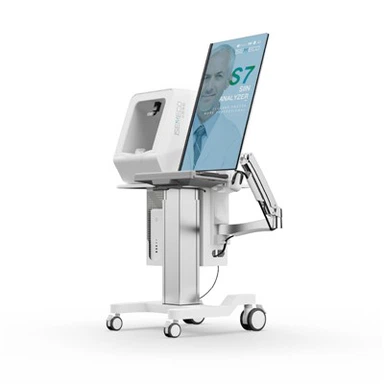
This is where technology must step in-and exactly why the Pro A Skin analyzer is transforming how clinics approach Fitzpatrick classification and treatment planning.

Here's what most people don't realize: Fitzpatrick Types IV, V, and VI (commonly found in Asian, Hispanic, Middle Eastern, and African skin) face unique challenges. Darker skin contains larger, more stable melanosomes that disperse melanin more efficiently to surrounding skin cells. This natural protection against sunburn is a double-edged sword.
On one hand, higher Fitzpatrick types age more slowly from UV exposure. On the other? They face significantly higher risks of post-inflammatory hyperpigmentation (PIH), keloids, and hypertrophic scarring following laser procedures. A laser setting perfectly safe for Fitzpatrick Type II could cause stubborn dark patches on Type V skin that take months-sometimes years-to fade.
Traditional assessment methods simply cannot predict these outcomes. But advanced imaging technology can.
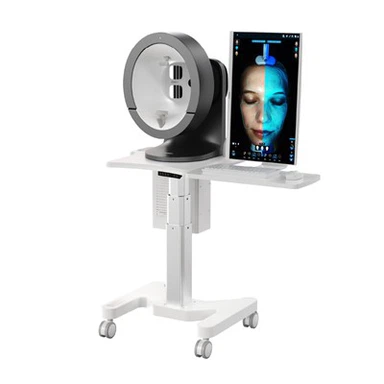
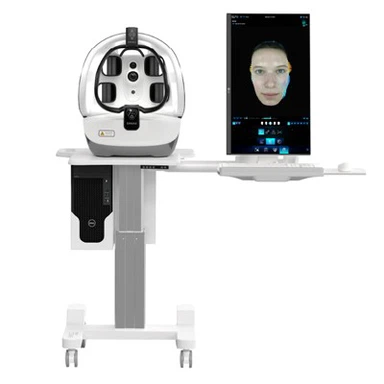
The Pro A Skin analyzer eliminates the guesswork by capturing what the naked eye-and the subjective patient questionnaire-cannot see. Using multi-spectral imaging including UV, Cross-Polarized Light (CPL), and RGB modes, this device visualizes melanin distribution across both epidermal and dermal layers. It doesn't ask how you think you tan. It shows precisely where melanin resides, in what concentration, and at what depth.
For clinics, this isn't just a technological upgrade. It's a fundamental shift from subjective opinion to objective, data-driven science.
Let's be clear: the Fitzpatrick Scale remains valuable. It provides a common language for skin classification. But leading dermatologists now acknowledge its limitations. The scale was originally developed using an entirely White patient base, relying on terms like "burn" and "tan" that don't adequately capture how UV radiation affects darker skin tones. Researchers are actively calling for alternatives, including the Roberts Skin Type Classification System, which incorporates hyperpigmentation and scarring data.
Until those alternatives become mainstream, what's a responsible practitioner-or an informed consumer-to do?
The answer lies in supplementing Fitzpatrick classification with objective biometric data. This is precisely where the Pro A Skin analyzer excels. Beyond basic skin typing, the device analyzes five core symptom categories across more than 30 detection dimensions: aging, sensitivity, pigmentation, skin texture, and skin tone.
Consider a patient who self-identifies as Fitzpatrick Type III ("sometimes burns, slowly tans"). The Pro A Skin analyzer might reveal deep dermal melanin concentrations that suggest a higher risk of post-laser pigmentation than standard Fitzpatrick guidelines would predict. Or it might detect subclinical inflammation-invisible to the naked eye-that makes certain energy-based treatments inadvisable until the skin barrier is restored.
This isn't hypothetical. It's happening in clinics today.
The Pro A Skin analyzer generates comprehensive reports that include overall skin scores, estimated skin age, moisture levels, oil balance, and AI-driven aging analysis across eight dimensions: forehead lines, glabellar lines, crow's feet, nasolabial folds, and more. Armed with this data, skincare professionals can move beyond one-size-fits-all recommendations to genuinely personalized regimens.
And for consumers? Walking into a clinic equipped with a Pro A Skin analyzer means walking out with answers-not assumptions.
Researchers continue to refine how we classify and treat different skin types. The Fitzpatrick Scale, despite its flaws, remains ubiquitous. But the standard of care is evolving. Leading clinics no longer ask "What's your Fitzpatrick type?" and stop there. They validate that classification with objective imaging.
The Pro A Skin analyzer represents this new paradigm. With its AI deep-learning model trained on millions of skin images, it delivers aging index rankings, sensitivity assessments, and pigmentation analysis that support-and often refine-traditional Fitzpatrick classification. It's why medical aesthetic organizations, dermatology chains, and skin management centers increasingly rely on this technology.
Whether you're a practitioner seeking to reduce laser complications and improve treatment outcomes, or a consumer who wants to stop guessing about your skin, the message is clear: don't trust your skin to subjective assessment alone.
Before your next laser session. Before another summer of sun exposure. Before investing in another skincare product that might not work for your unique complexion.
Ask for the Pro A Skin analyzer. See your skin as it truly is. And finally move from guessing to knowing.